

How fabric takes shape, and how shape gains freedom of movement.
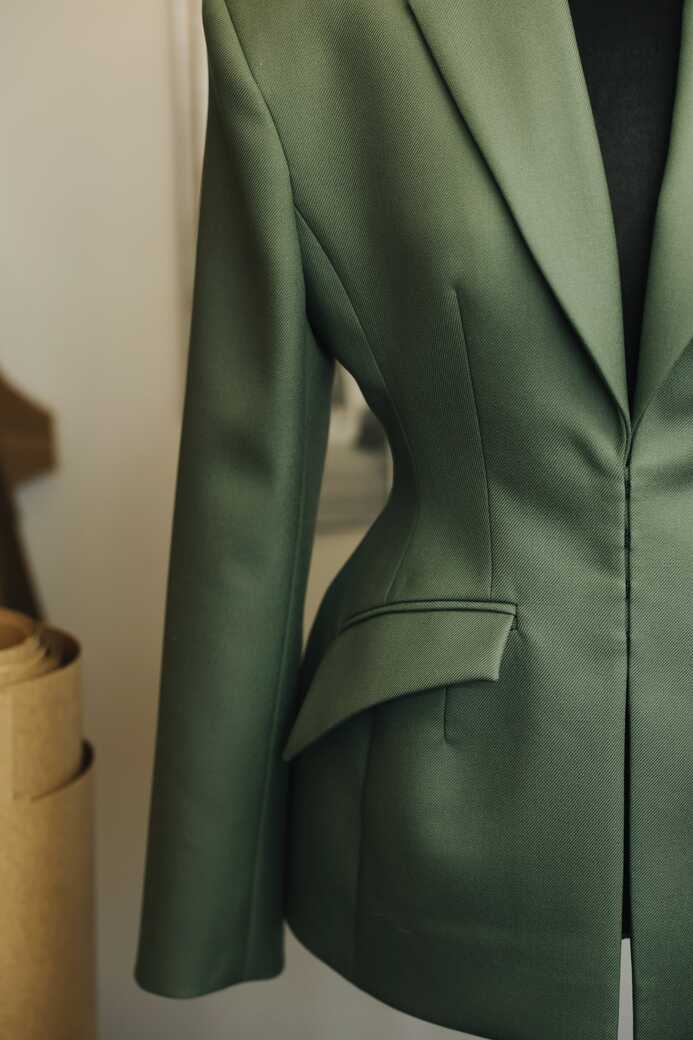
In a sense, a jacket is a sculpture. Only instead of stone, we work with textile.
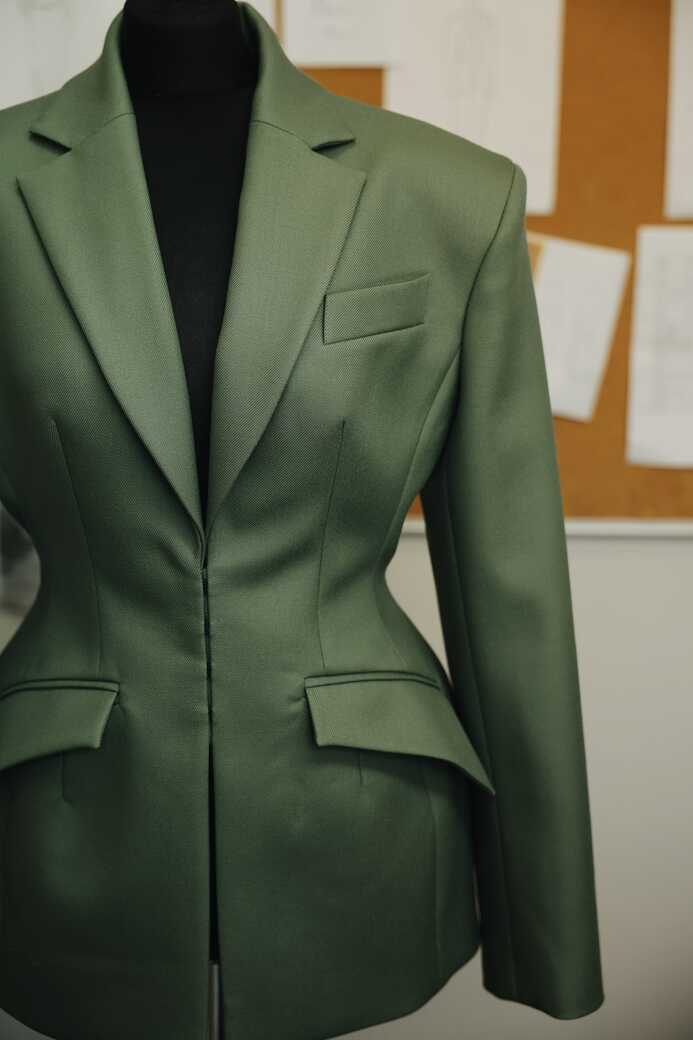
For L’ESKIZZO, a jacket is more than a wardrobe piece. Fabric is more than raw material, and tailoring is something far deeper than a production process.
It is the art of form-making, where the architecture of the cut, the properties of the material and the craftsmanship of the team come together to create a silhouette around a woman.
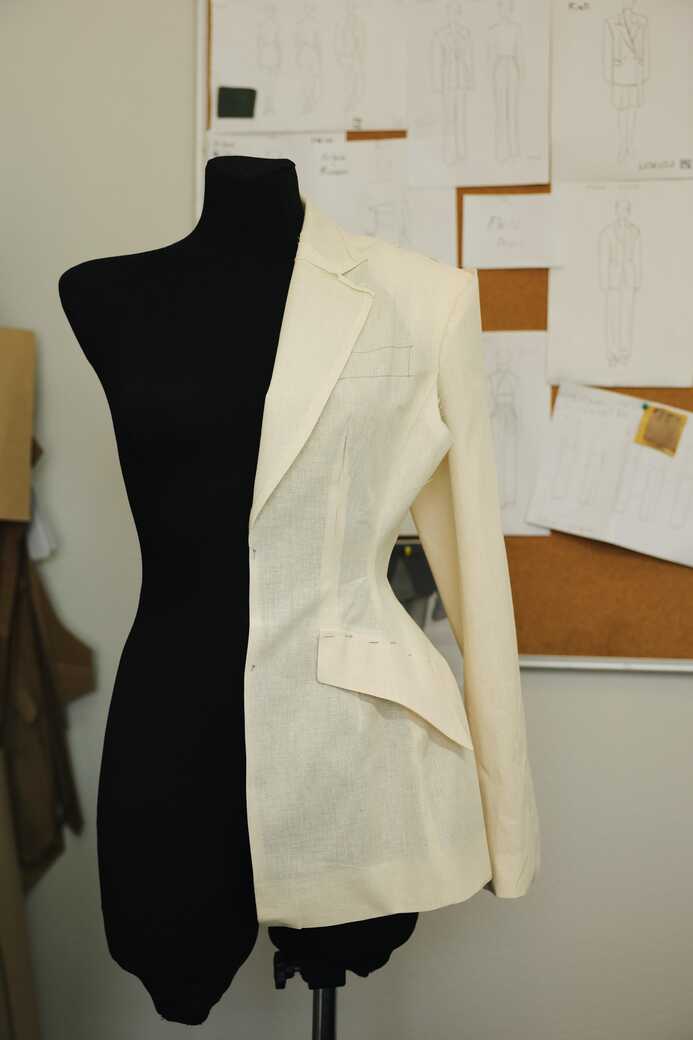
The architecture of a jacket: from flat to volume
The construction of a jacket is not simply a flat piece of fabric joined by a few seams.
It is a complex process in which every action matters: basting, stretching, easing, setting, stitching, topstitching.
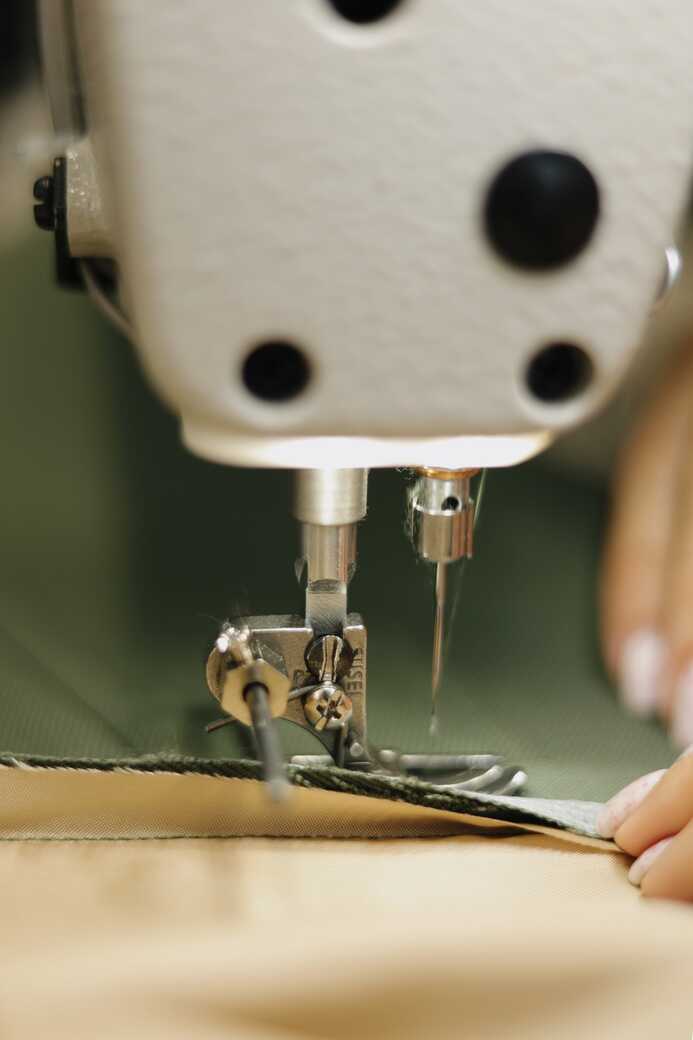
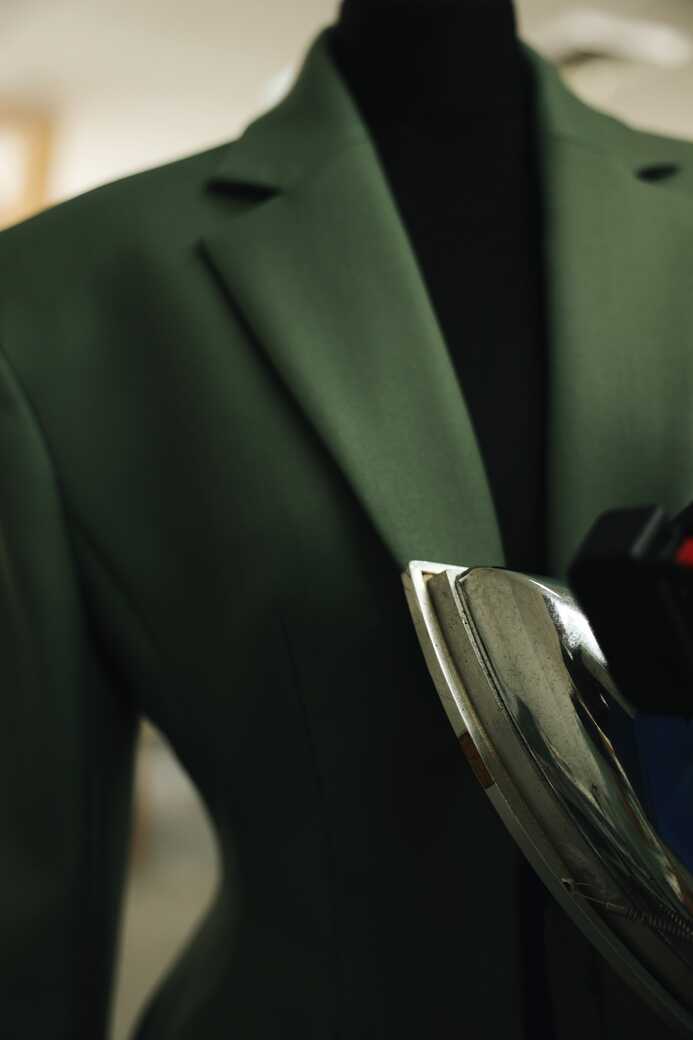
Step by step, the fabric changes. It gains volume, shapes the line of the shoulder, defines the waist, creates the right proportions.
The form is literally carved out of the material.
But while a stone sculpture stays unchanged once it is finished, a textile one continues to live.
It moves with the body, responds to every gesture, changes with a woman’s posture and rhythm.
This is one of the most demanding tasks for the L’ESKIZZO team: to create an architecturally expressive silhouette that does not restrict movement, but naturally accompanies it.
This approach lies at the heart of our Tender Tailoring philosophy — a balance between structure and tenderness, precise construction and uncompromising comfort.
Fabric as the starting point of a design
At L’ESKIZZO, work on a silhouette is inseparable from the choice of material.
We do not see fabric as a passive base that must be given a predetermined shape.
On the contrary, every material has its own character, drape and possibilities. Sometimes it is the fabric itself that tells us what the future jacket will be.
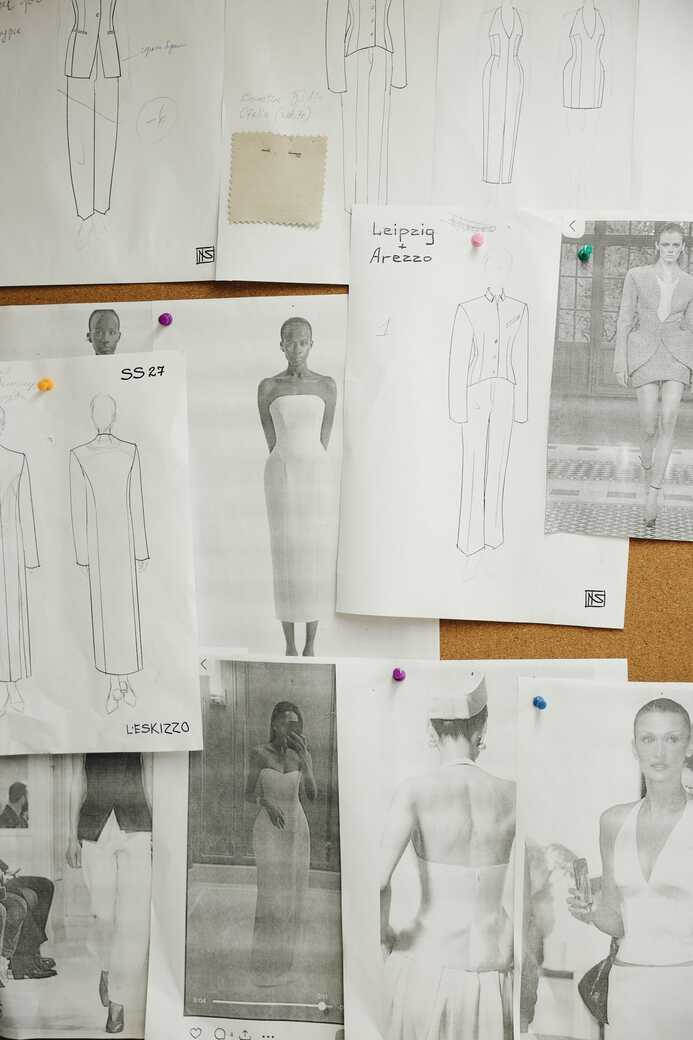
Dense structured wool allows us to create clean architectural lines. Light polished wool opens up possibilities for fluid, flowing silhouettes. Flannel brings softness and tactile comfort, while a blend of wool and cashmere brings a special feeling of warmth.
That is why choosing fabrics for each collection is a stage of creative research in its own right.
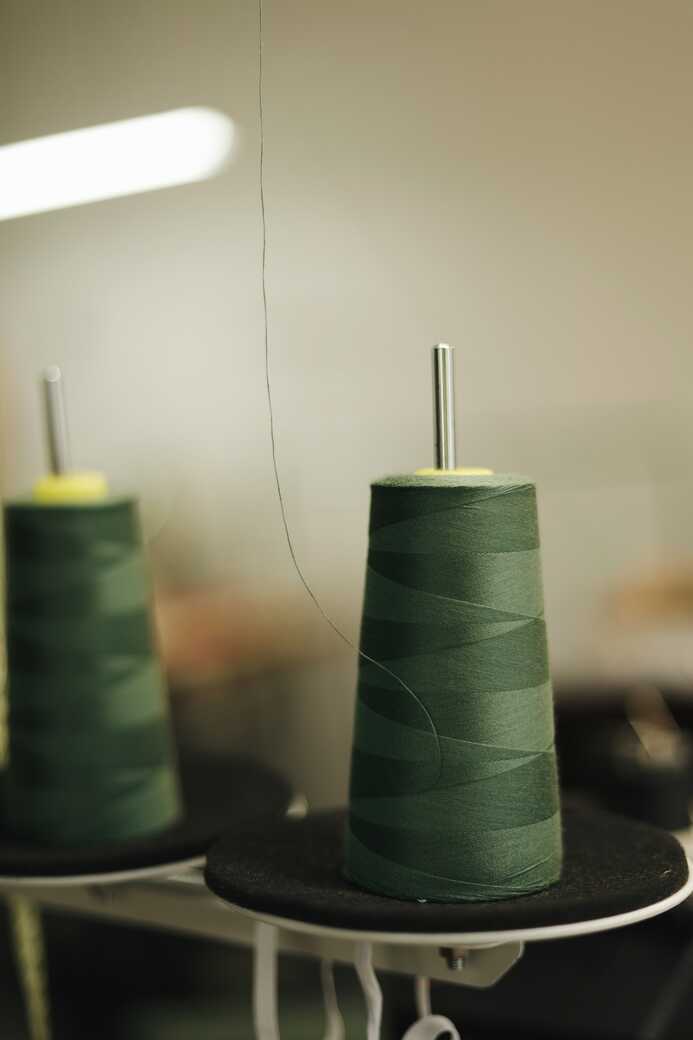
Khaki olive wool: structure and depth of colour
For one of our structured silhouettes, we found a special olive wool at a mill whose history dates back to 1757.
This material caught our attention with its combination of a rich khaki shade, a delicate sheen and a crisp structure.
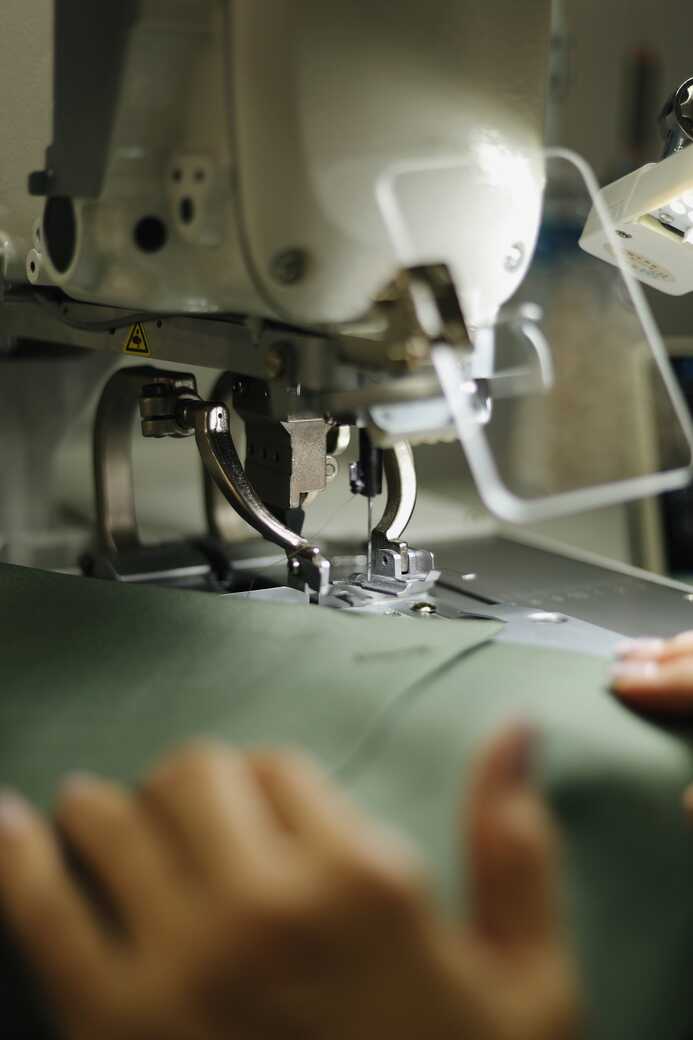
This was exactly the fabric we were looking for the L’ESKIZZO woman — expressive yet restrained, able to emphasise the architecture of the silhouette without unnecessary details.
Its character allows us to work with clean lines and form while preserving the elegance of the finished garment.
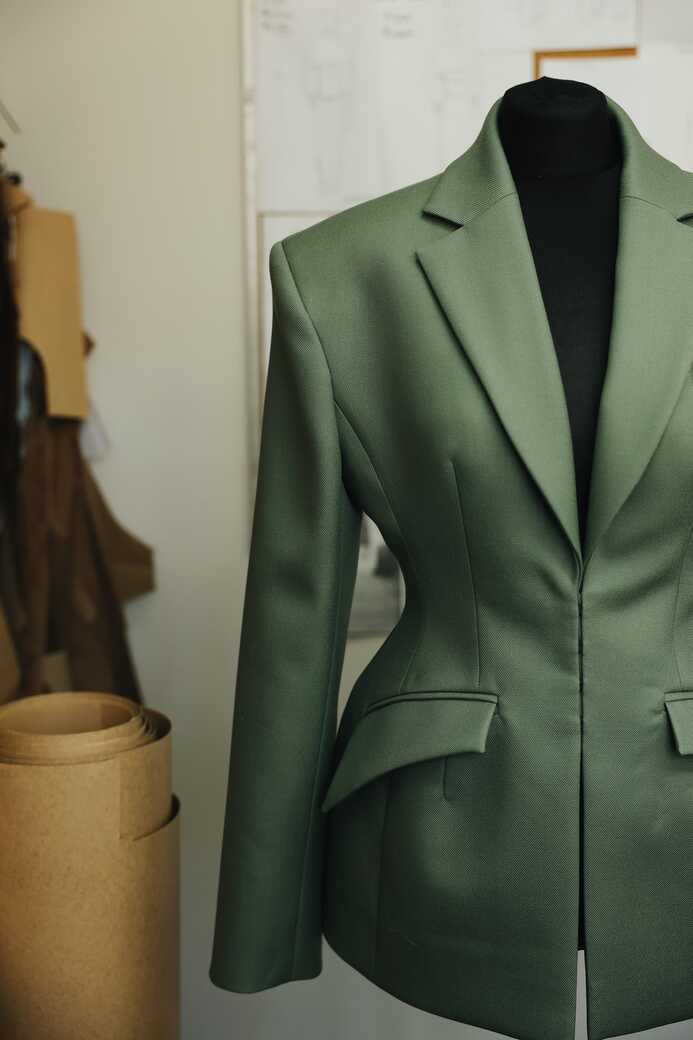
Jackets in this fabric: Remetea Khaki, Rotterdam Khaki
Reda brown wool: when wool becomes fluid
Sometimes a material changes our idea of how it should be worked with.
That is what happened with the brown wool from the Italian mill Reda, whose history begins in 1865.
During testing, we realised that this fabric needed a completely different approach from traditional suiting wool.
Despite its composition — 100% wool — the material is extremely light, supple and drapes beautifully.
In the way it moves, it resembles fluid fabrics such as viscose satin.
These very qualities inspired us to create soft silhouettes in which the construction does not dominate the body, but gently interacts with it.
When choosing materials, we also value the manufacturers’ responsible approach to textile production.
Nero black wool: the foundation of a timeless wardrobe
There are materials we return to again and again.
For L’ESKIZZO, one of them is Nero, a structured black wool.
We chose it last year, and since then it has remained the constant foundation of our black suits.
It is important for us to find materials that can become part of a woman’s wardrobe for years to come.
Nero black wool gives us confidence in form and, at the same time, freedom for new design solutions.
It allows us to return to familiar silhouettes, rethink their proportions and create new constructions while keeping the brand’s recognisable language.
Jackets in this fabric: Avignon Nero, Bazel Nero2, LaCroix Nero2
Red wool and cashmere: warmth and expression
With this fabric, the colour is the first thing that catches the eye.
Its rich red shade makes the material expressive, but its composition is just as important — a blend of wool and cashmere.
It is a fabric that combines visual impact with a sense of warmth.
It seems made for autumn moments, when you want to wrap yourself in comfort without giving up the expressiveness of your own style.
For L’ESKIZZO, it is another way to explore the balance between the strength of form and the tenderness of sensation.
Jacket in this fabric: Brussel Red
Cappuccino coating wool: architectural form
A classic oatmeal shade, a subtle sheen and a refined texture with a delicate nap.
Cappuccino coating wool has a dense, firm structure that is especially well suited to an autumn coat-jacket.
This material allows us to work with volume, clean lines and the expressive architecture of the garment.
Here, structure becomes the main design tool, while the calm shade highlights the purity of the form.
Jacket in this fabric: Montana Cappuccino
Grey flannel wool: softness in a structured silhouette
Suiting flannel wool, in different interpretations, appears in almost every L’ESKIZZO autumn collection.
We value it for its fine, light structure, comfort in wear and special tactility.
The soft flannel finish creates a feeling of autumn cosiness, while a delicate silky sheen adds depth to the material.
For the fitted Lacroix jacket, we chose this very grey wool.
It allows us to combine clarity of construction with softness of material — two qualities that may seem opposite at first glance, but together shape the special character of the silhouette.
Jacket in this fabric: LaCroix Grey
Tender Tailoring: form that supports
All these materials differ in texture, density, drape and character.
But they are united by our approach to making clothes.
We start with the woman. With her movements, her feelings, her individuality.
Then we look for the form that can bring all of this forward.
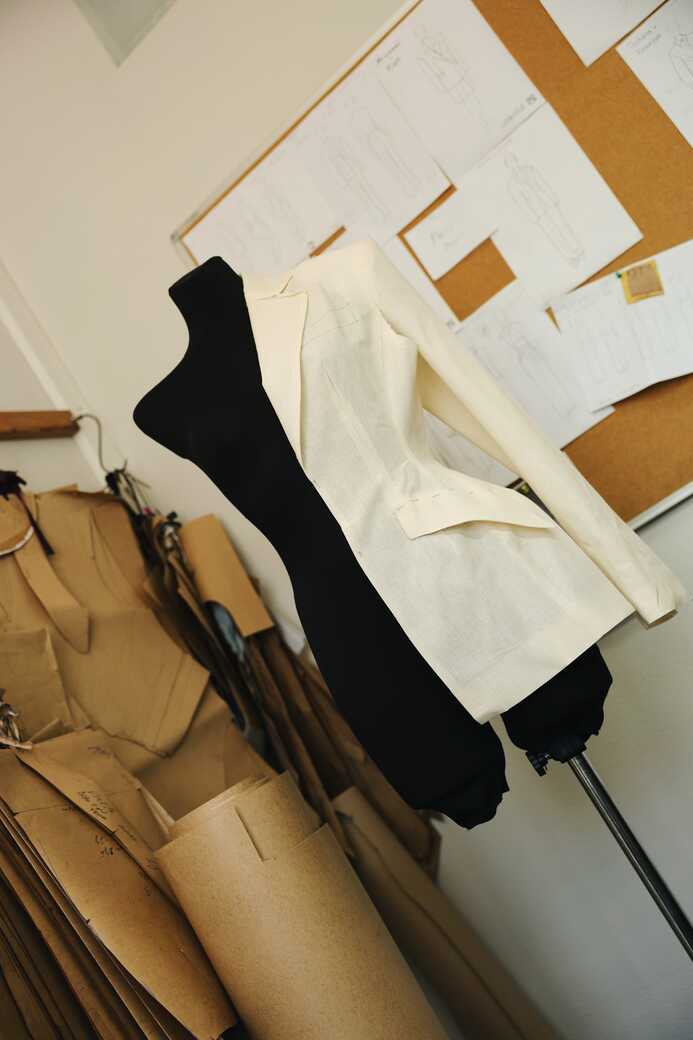
For us, mastery of the cut is not only the ability to create a complex construction. It is the ability to make it feel natural to the person who will wear the finished garment.
That is why our jackets are textile sculptures of a kind.
Sculptures that do not stay still.
They live together with the woman.
For more answers about quality, fit and structured cut, read «L’ESKIZZO Craftsmanship: questions and answers».
L’ESKIZZO. Tender Tailoring. Silhouettes made with attention to every woman.