

A guide to the fabrics, cut and fit of a women’s wool blazer for autumn.
A wool blazer is one of the foundational pieces of a woman’s wardrobe. It shapes the silhouette, defines the character of a look and adapts easily to different situations in life. In autumn the blazer becomes especially relevant: it can be worn as a standalone outer layer or built into layered looks.
How do you choose a quality women’s wool blazer that will stay relevant for many seasons? At L’ESKIZZO we believe the answer lies in the balance of three elements: fabric, construction and fit.
Wool fabrics: from classic to expressive textures
Wool has natural thermoregulating properties, breathes well and, depending on the structure of the fabric, holds its shape. Yet different wool fabrics have different characters and reveal themselves differently in the construction of a blazer.
Suiting wool is a smooth, fluid fabric that allows for clean lines and complex constructed forms. It is particularly well suited to structured and fitted blazers.
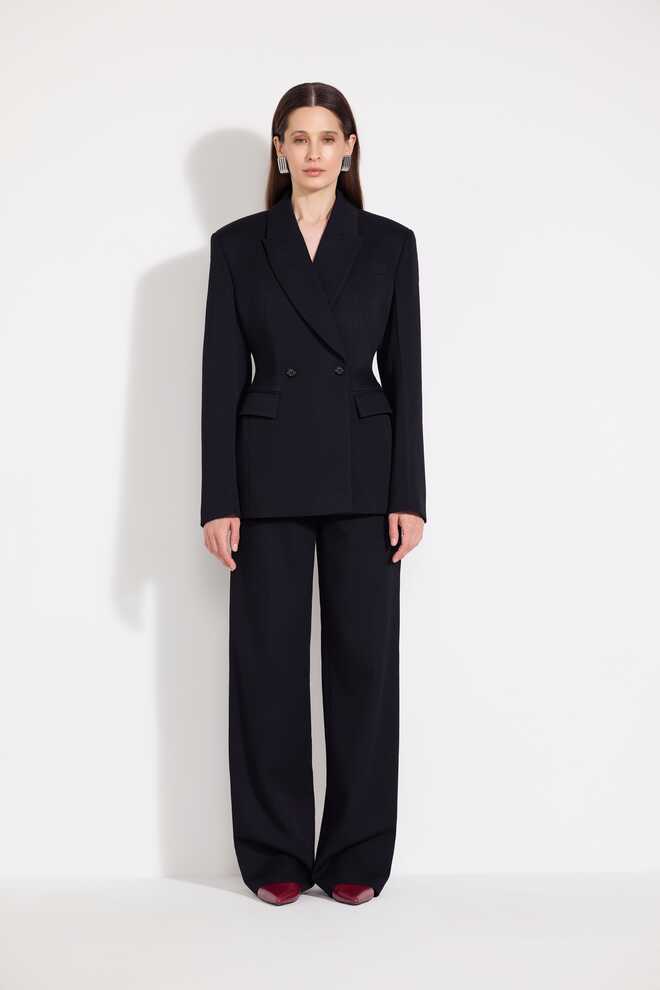
Wool flannel stands out for its soft, slightly brushed surface. Its texture adds depth to a look, while its density makes it right for the cooler season.
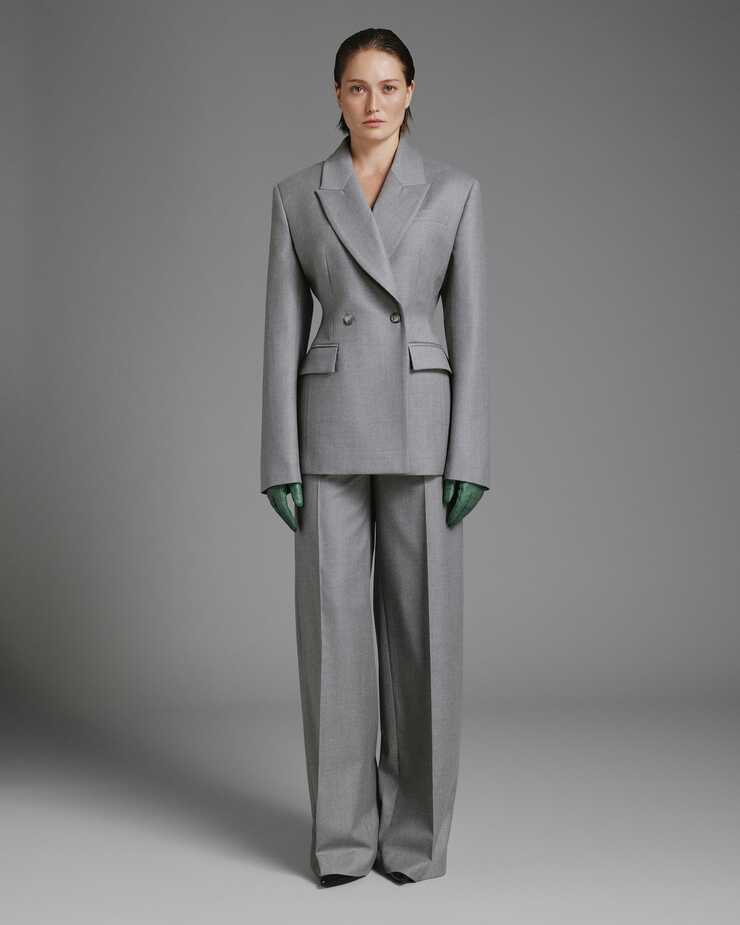
Wool tweed is a fabric with a pronounced texture that holds its shape well and gives the silhouette character. Even a minimal tweed blazer can become a self-sufficient statement piece.
Wool with cashmere combines the natural properties of wool with the delicate softness of cashmere. It is the choice for those who particularly value the tactile quality of materials.
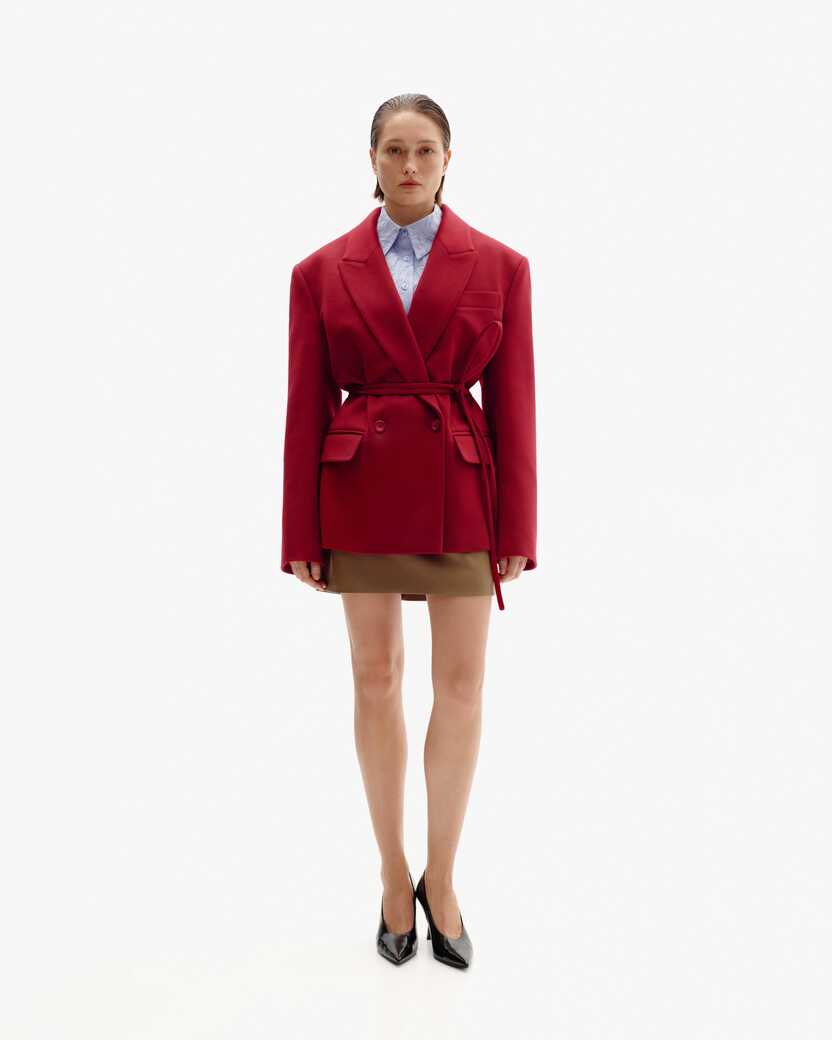
Nubuck-effect wool draws attention with its matte, velvety surface. This texture is especially striking in minimalist silhouettes, where the material itself becomes the main means of expression.
Does a blazer have to be 100% wool?
A high natural wool content is an important, but not the only, criterion of fabric quality.
Adding cashmere brings extra softness, silk adds fluidity and a subtle sheen, polyamide adds durability, and a small amount of elastane provides stretch and comfort in movement.
For an autumn wardrobe, look for fabrics with a high wool content while also assessing their density, texture and ability to hold their shape.
In a designer blazer the fabric is part of the construction. Its properties determine how precisely the idea of the silhouette can be realised.
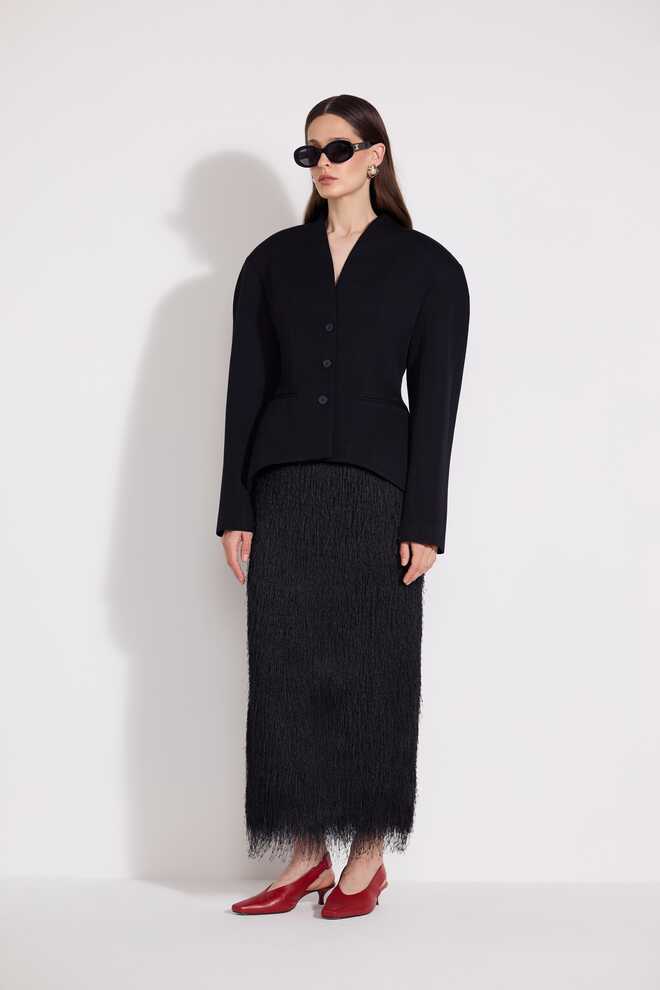
The architecture of a blazer: which silhouette to choose
A blazer can change how proportions are perceived, create volume, emphasise the lines of the body or, conversely, leave space between the body and the fabric.
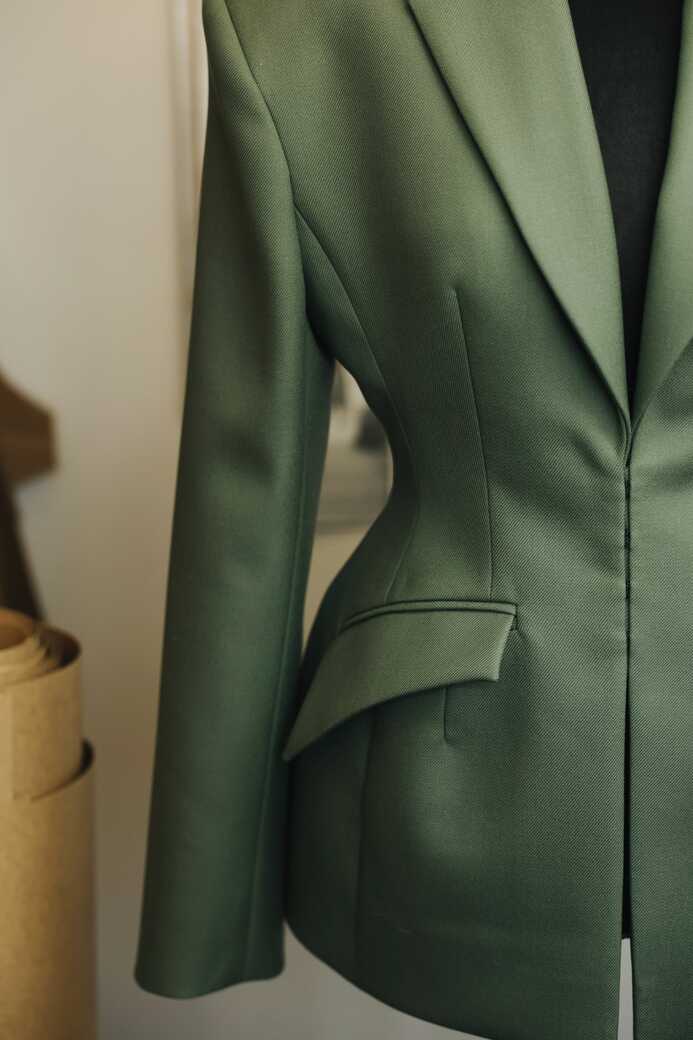
A fitted wool blazer creates a defined silhouette by accentuating the waistline. The combination of structured shoulders and sculptural cut gives it particular character.
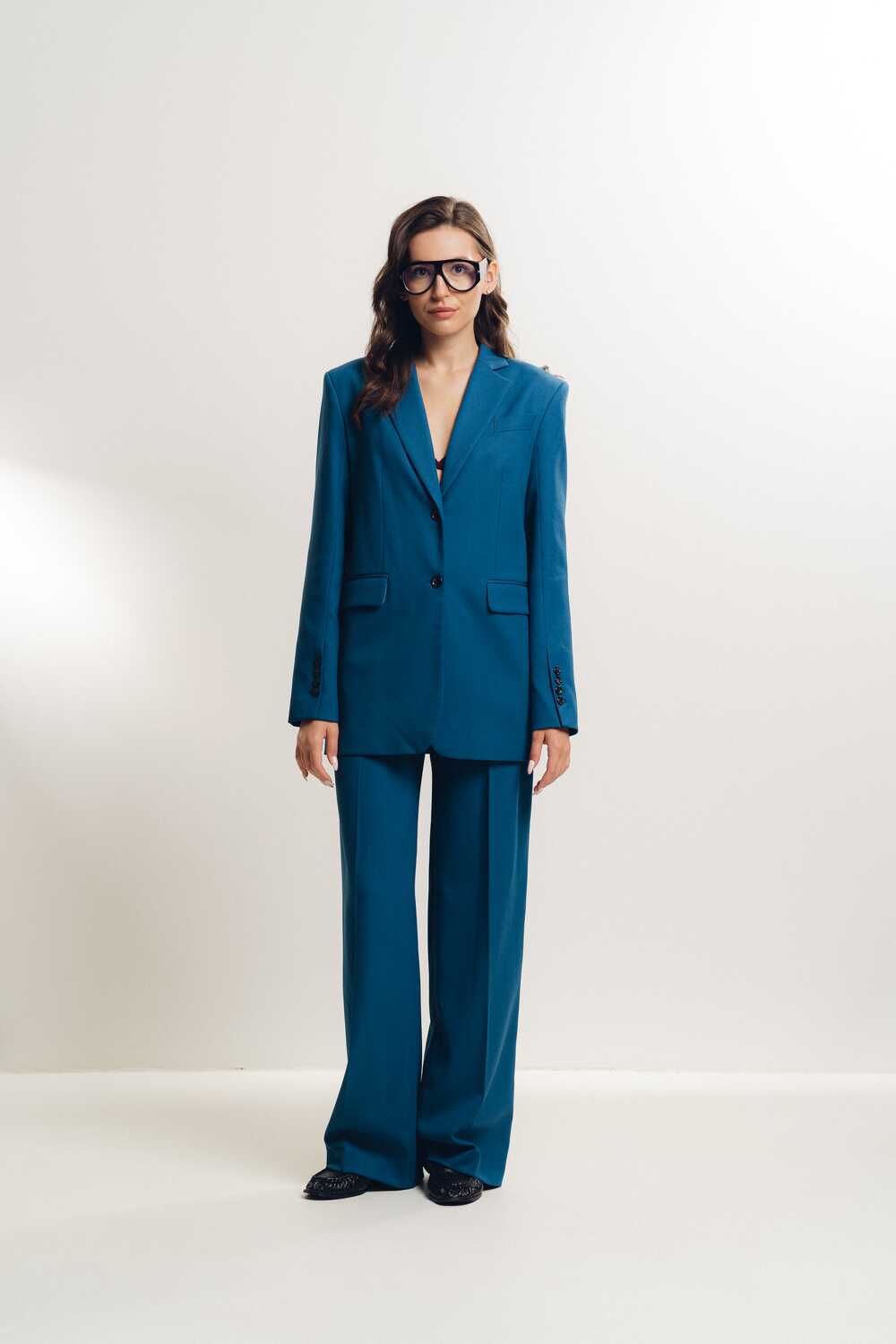
A straight-cut blazer creates a restrained vertical line. It pairs naturally with classic trousers as well as denim, dresses and long skirts.
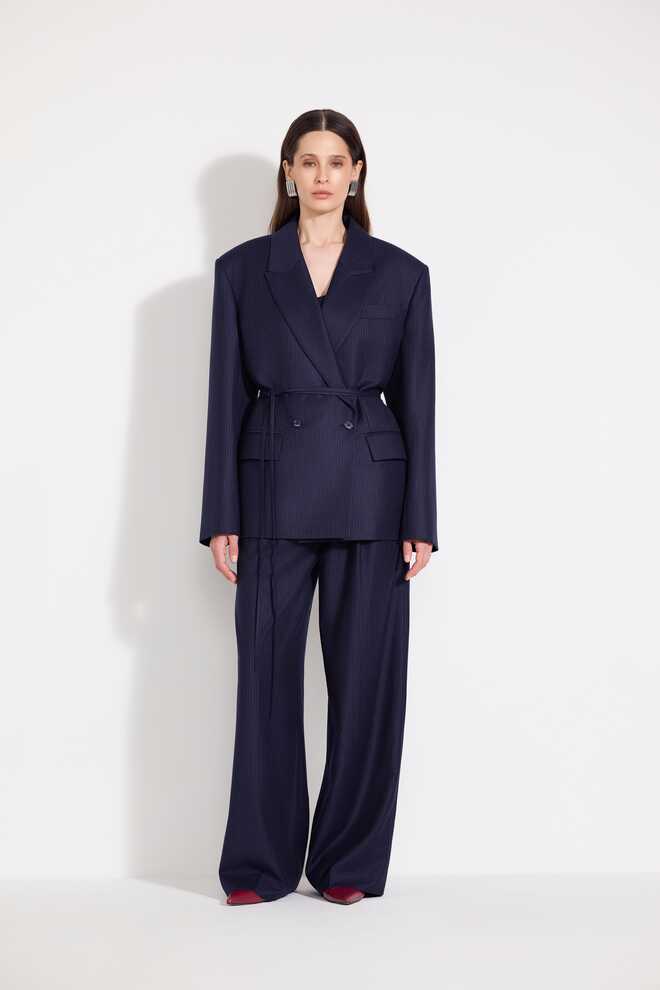
An oversized blazer lets you play with volume and layering. Its quality is defined not by size but by the precision of its proportions: an extended shoulder line, a considered length and a balanced construction.
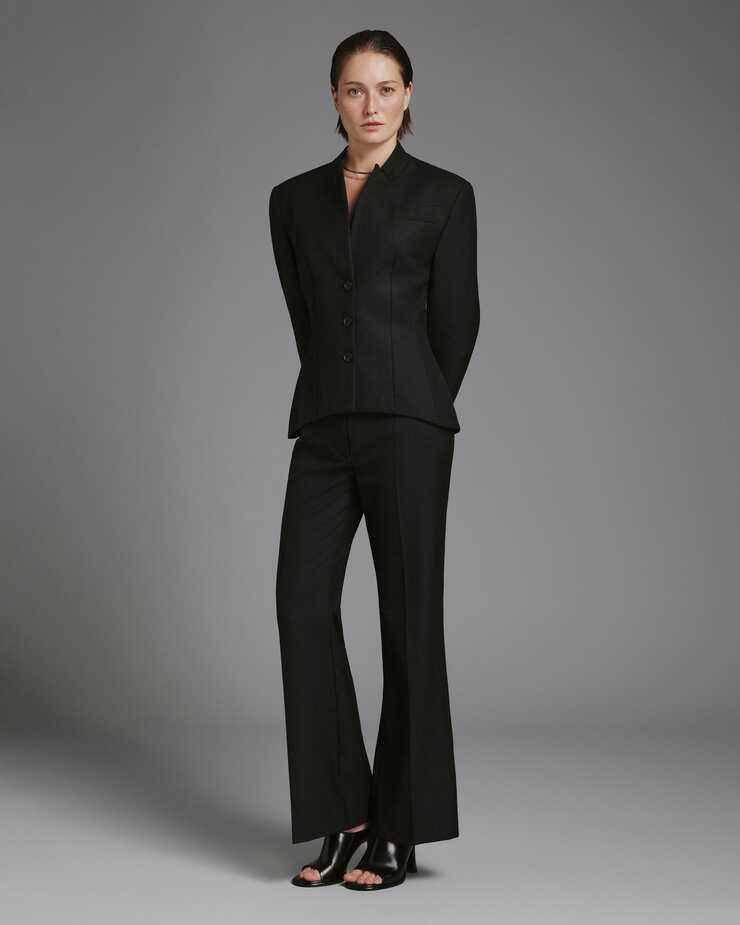
A cropped blazer changes the proportions of a look, visually emphasising the lower part of the silhouette. It works especially well with high-waisted trousers and skirts.
Single- or double-breasted construction, the shape of the lapels, the placement of the buttons — each of these details also shapes the character of a blazer.
How to tell if a blazer fits properly
A good fit is not only about how a blazer looks in the mirror, but also how it behaves in movement.
When trying one on, pay attention to five key details:
• Shoulder line. It should follow the design intent of the model without creating random creases.
• Collar and lapels. They should lie naturally against the body while keeping their shape.
• Chest and waist. When buttoned, the blazer should not create excessive pulling of the fabric.
• Sleeves. Their construction should allow enough freedom of movement.
• Length. It should work in harmony with your body’s proportions and the rest of your wardrobe.
When choosing a wool blazer for autumn, also try it on over fine knitwear or a turtleneck if you plan to wear it in layered looks.
What sets a quality designer blazer apart
The true quality of a blazer is often hidden inside the garment. The internal construction, fabric processing, shaping of the shoulders, lining and precision of the seams determine how the blazer will look not only at the moment of purchase, but after long wear.
A quality structured blazer should hold its shape without feeling overly rigid. Its construction supports the silhouette without restricting a woman’s natural movement.
This balance between structure and freedom lies at the heart of L’ESKIZZO’s approach to making blazers.
How to style a wool blazer in autumn
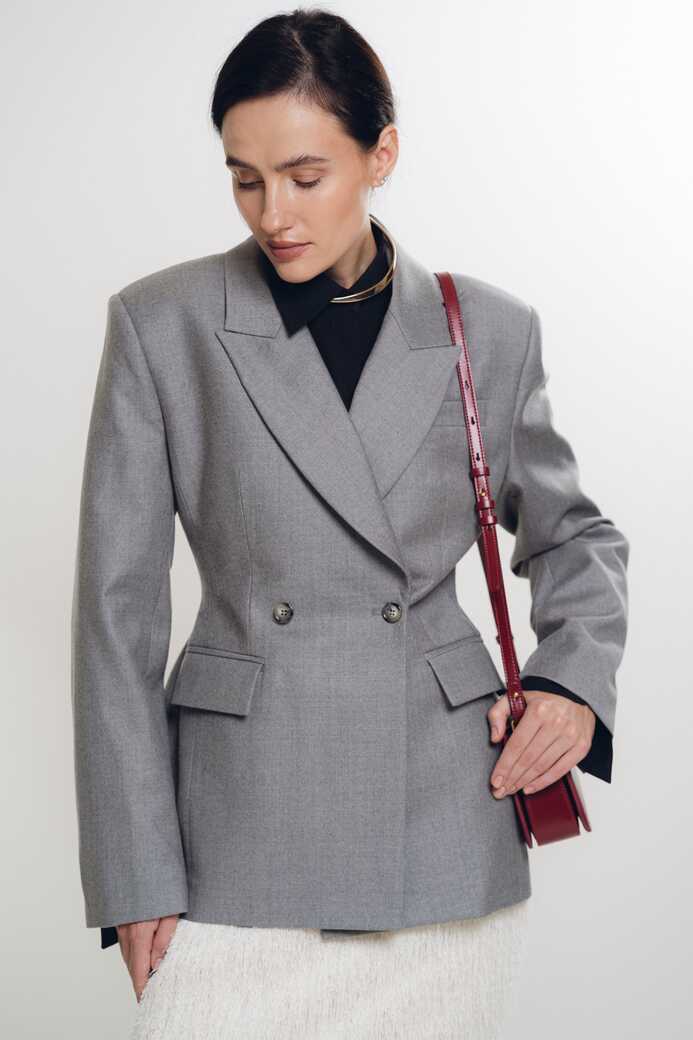
A wool blazer easily goes beyond the classic business wardrobe. With fine knitwear and wide-leg trousers it creates a restrained everyday look. With a long skirt it highlights the contrast between structure and fluidity. With denim it takes on a relaxed character.
Graphite, chocolate, navy and grey-beige shades form a versatile base for an autumn wardrobe. Deep burgundy or olive can be a more personal colour choice.
It matters to choose not only what is easy to combine, but also what reflects your character.
How to care for a wool blazer
To help a wool blazer keep its shape and texture for many seasons, store it on wide hangers, air it after wearing, give the fabric time to recover and avoid overly frequent dry cleaning.
Always follow the manufacturer’s care instructions, since a blazer consists not only of the outer fabric but also of internal construction materials.
The L’ESKIZZO wool blazer: structure built around the woman
L’ESKIZZO is a Ukrainian designer womenswear brand founded in Kyiv in 2015. Its aesthetic is built on architectural cut, sculptural silhouettes, expressive textures and attention to the internal construction of each garment.
The blazer is one of the foundational elements of the brand’s collections. We explore its form and work with proportions and the properties of fabrics, creating clothes in which structure coexists with freedom of movement.
We create clothes around the woman, not around an image she is expected to fit.
The perfect wool blazer is not the one that follows every rule. It is the one in which you feel like yourself.